
pgTAP tests and coverage
PostgreSQL Workbench runs pgTAP tests in VS Code's native Testing UI and reports PL/pgSQL statement and branch coverage in the editor. Coverage is collected independently from the debugger in a dedicated transaction.
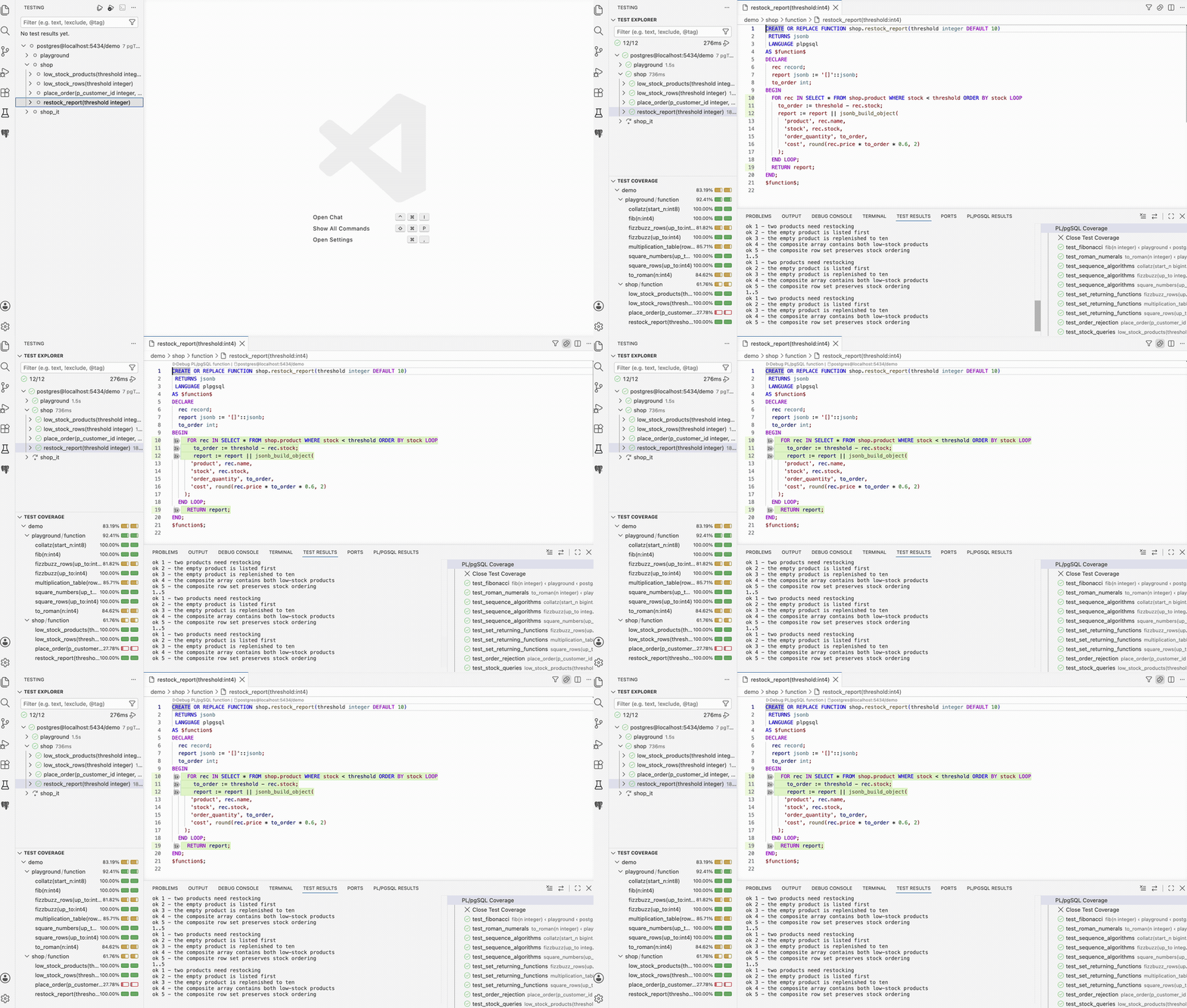
Discovery
Install pgTAP in the development database. Matching functions must return
SETOF text; zero-argument functions can run automatically. Defaults match
*_ut.test_* and *_it.test_* against schema.function. Change the list with
postgresql-workbench.tests.patterns.
Schemas containing matched tests are treated as test infrastructure. The dependency walker may traverse their helpers, but those helpers are not reported as application coverage.
How coverage is calculated
- Resolve routines reached directly and transitively by the selected pgTAP tests.
- Instrument the selected PL/pgSQL routines once inside a dedicated transaction.
- Run every selected test once and collect statement and branch counters.
- Publish coverage through VS Code's native coverage API and always roll back.
Branch coverage distinguishes executed alternatives in conditional and loop control flow. The deployed source is checked again before detailed coverage is returned, preventing stale editor mappings.
Permissions
The database role needs permission to execute tests and CREATE OR REPLACE the
covered routines. Instrumentation briefly takes PostgreSQL locks. Routines
containing transaction control are rejected because they cannot be isolated by
the runner.
Limits
- 200 routines per request by default.
- 300 seconds per database suite.
- 200 retained TAP lines per test.
- 1 MiB retained TAP payload per test.
- 2 databases covered concurrently.
All limits are configurable under postgresql-workbench.coverage.*.
Run coverage against a development or isolated test database, never a production database.